
For most Sunnybank homeowners considering rekeying locks Sunnybank locksmiths regularly get called about, the underlying question isn’t really “rekey or replace” — it’s “which of these two options actually solves my problem, at the lowest reasonable cost, without leaving a security gap I don’t know about?”
The answer depends more on your specific situation than most people realise. Rekeying and full lock replacement aren’t interchangeable — they solve different problems, cost different amounts, and leave you with different long-term outcomes. Getting the choice right saves genuine money and delivers the security outcome you actually wanted, while getting it wrong often means paying twice.
What Rekeying Actually Does (And Doesn’t Do)
Rekeying is the process of changing a lock’s internal configuration so that old keys stop working and new keys are needed to operate it. The lock itself stays in place — the visible hardware doesn’t change, the door doesn’t need reworking, and the mechanism keeps operating as it always has. What changes is the specific pin combination inside the cylinder, which is what any given key is cut to match.
For homeowners familiar with rekeying locks Sunnybank properties commonly need, this is often the quiet default. A locksmith can typically rekey a standard cylinder lock in 15–30 minutes on-site, and multiple locks on a property can be rekeyed to work with a single new key — meaning the same key opens the front, back, and laundry doors after the job.
What rekeying doesn’t do: it doesn’t upgrade the mechanical security of the lock itself. If your existing lock is a low-grade builder’s-standard lock, rekeying it makes the old keys stop working but leaves you with the same low-grade lock, just with different keys. If the lock is worn, damaged, or already failing mechanically, rekeying may make the problem worse rather than better.
What Full Lock Replacement Involves
Full lock replacement means removing the existing lock hardware entirely and fitting new hardware in its place. Depending on the door and existing installation, this can be a straightforward swap (if the new lock uses the same footprint as the old one) or a more involved job requiring the door itself to be modified (if you’re changing lock types entirely).
Replacement is what you need when:
- The lock hardware itself has failed or is failing
- You want to upgrade to a genuinely better lock than what’s currently fitted
- You’re changing lock type — for example, replacing a keyed doorknob with a proper deadbolt
- The existing lock is old enough that keys are no longer available or parts are no longer manufactured
Replacement is more expensive than rekeying because you’re paying for new hardware plus fitting labour. It also takes longer, and depending on the lock and door, may involve small amounts of visible modification to the door itself.
When Rekeying Is Almost Always the Right Choice
Rekeying is the correct answer for the situations that come up most often in daily home life.
Moving into a purchased home. You have no idea how many people have keys — previous owners, cleaners, tradies, agents, family of previous owners, ex-partners of previous owners. Rekeying resets that completely without touching perfectly good hardware.
Lost a key. If the lost key had any identifying tag on it, or was in a wallet or bag with your address, rekeying stops it working the moment the job is done.
Housemate moved out on bad terms. Every key that housemate had (and every copy they might have made) stops working. Everyone still living in the house gets new keys cut to the new pattern.
Ex-partner moved out. Same logic — old keys stop working immediately. Don’t rely on the assumption that they’ll return every key, or that they didn’t make copies during the relationship.
Existing hardware is still in good condition. If the lock itself works properly and mechanical security is adequate, there’s no reason to replace it. Rekey it and move on.
Pro Tip:
Ask about “key-alike” service when rekeying multiple locks — one new key that opens the front, back, laundry, and side gate is a huge everyday convenience and usually costs very little extra during a rekey job.
When Full Replacement Genuinely Makes More Sense
Some situations do call for replacement rather than rekeying.
The existing lock is worn or intermittent. A lock that sticks, requires jiggling, or occasionally won’t turn is at the end of its useful life. Rekeying a failing lock is throwing money at a problem that will return within months. Replace it.
You’re upgrading security level. If your current front door has a basic keyed knob and no separate deadbolt, adding a proper deadbolt is a genuine upgrade — that’s replacement (of the missing hardware), not rekeying.
The lock is very old with unavailable parts. Some older Sunnybank homes still have original hardware from the 1960s or 1970s that’s beyond the point where rekeying is viable. Replacement is the practical answer.
After a forced entry attempt. If someone has tried to jimmy, drill, or otherwise force the lock, internal damage may be present that isn’t obvious externally. Replace rather than rely on rekeying compromised hardware.
Insurance or lease requirements. Some newer insurance policies and commercial leases specify minimum security ratings that older hardware doesn’t meet, regardless of how well it’s been rekeyed.
Cost Comparison Across Typical Sunnybank Scenarios
Rough guide to what each option typically runs in Sunnybank:
- Single lock rekey: $60–120 depending on lock type and location
- Whole-house rekey (front, back, laundry keyed alike): $150–300
- Single lock replacement (like-for-like standard cylinder): $180–400 including hardware
- Whole-house replacement with upgraded deadbolts: $600–1500 depending on hardware choice
Over a decade, if the underlying hardware is quality and just needs periodic rekeying at ownership changes, the total cost of “keep and rekey” often ends up less than half of “replace on every event.” The exception is when the hardware itself needs upgrading — then earlier replacement pays for itself in improved security and reduced ongoing maintenance.
“Ninety-plus percent of the rekey jobs we do in Sunnybank are for people who thought they needed all new locks. Once we look at the hardware, most of it’s fine — they just needed the keys reset, not the whole system replaced.”
— Local Locksmith, Sunnybank
How Rekeying Actually Works Behind the Scenes
Inside a standard cylinder lock, small spring-loaded pins of specific lengths sit in the barrel. When the correct key is inserted, its ridges lift each pin to exactly the right height, allowing the barrel to turn. A wrong key lifts the pins to the wrong heights, jamming the barrel in place.
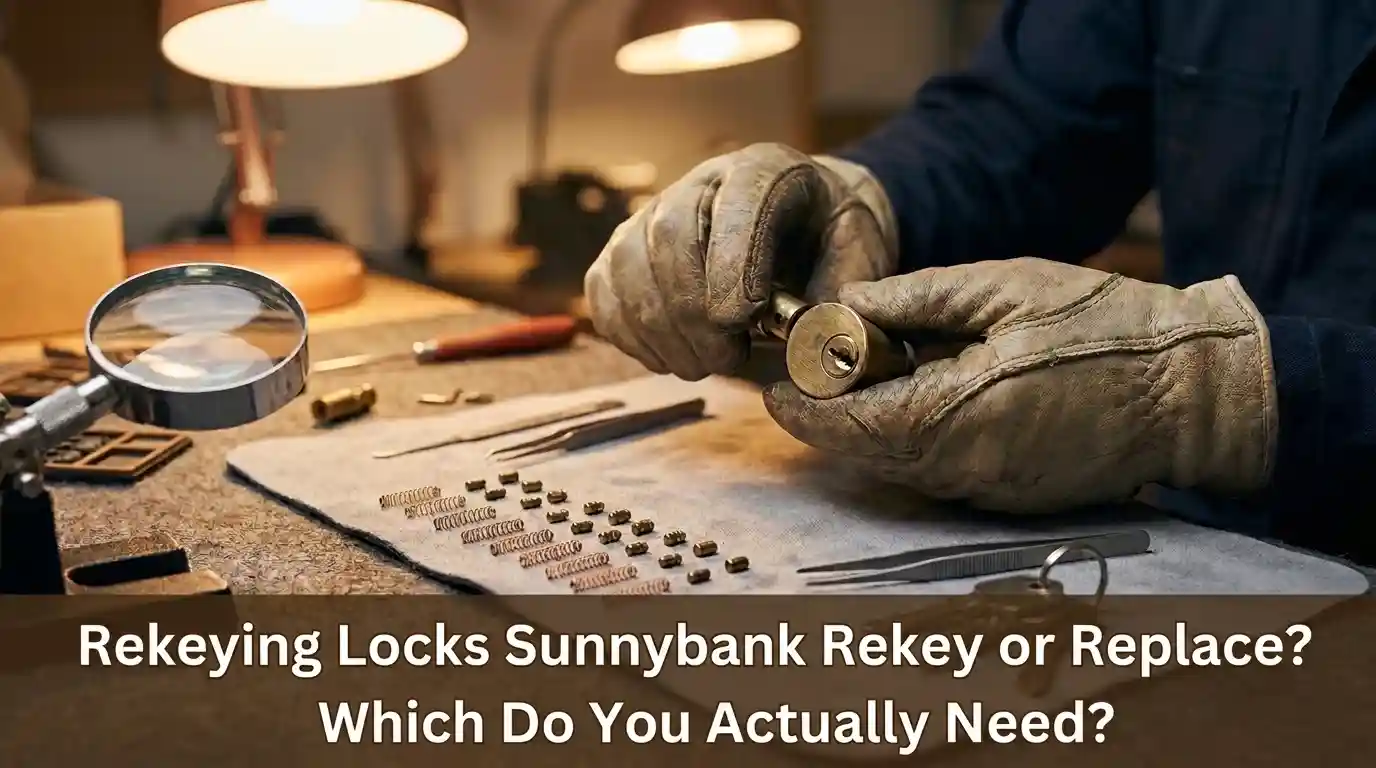
Rekeying involves removing the cylinder, disassembling it, replacing the pins with a different combination of lengths, and reassembling. The locksmith then cuts new keys matched to the new pin pattern. That’s it — the lock is now operated by different keys but is otherwise unchanged.
For mortice locks (common in older Sunnybank homes with more character), the process is broadly similar but involves more disassembly of the lock case itself, since the mechanism is built into the door rather than mounted through it. Skill and familiarity matter more with these older mechanisms.
Modern high-security locks with restricted key systems can also be rekeyed, but the key cutting is controlled by the manufacturer or authorised locksmith, meaning you can’t just take the new key to any hardware store for copies. That’s actually a benefit — it prevents unauthorised copying — but it does mean choosing the original supplier when the time comes for extra copies.
Situations Where People Frequently Get It Wrong
A few common mistakes worth avoiding.
Assuming rekeying is always cheaper. For a lock that’s genuinely failing, rekeying isn’t cheaper long term — you’ll be replacing it within months anyway. Get an honest assessment of the hardware condition before deciding.
Choosing replacement to feel “safer.” Rekeying is genuinely as effective as replacement at stopping old keys from working. Choosing replacement over rekeying for security reasons alone, when the existing hardware is adequate, is paying more without gaining anything.
Only rekeying the front door. If you’re rekeying because someone shouldn’t have access anymore, they had keys to more than just the front door. Rekey every external lock at the same time, keyed alike where possible.
Waiting until keys are “properly lost.” If you can’t find a key, the honest assumption is that it’s findable by someone else too. Rekey now rather than wait to be certain it’s gone forever.
Warning Sign:
Avoid cheap key cutters who claim they can “just cut different keys to make the old ones stop working.” That’s not how locks work — either the same key still opens the lock, or the lock has been physically rekeyed. There’s no in-between.
Quick Checklist Before Booking Either Job
Work through these before committing to rekeying or replacement.
- Confirm the current lock hardware is in good working condition (rekey) or genuinely failing (replace)
- Count every external lock — plan to rekey or replace all of them together where reasonable
- Ask specifically for “keyed alike” service if you want one key to operate multiple locks
- Get quotes for both rekeying and replacement so you can compare with real numbers
- Check whether any insurance or lease conditions require a specific minimum security level
Making the Right Call for Your Specific Situation
The choice between rekeying and replacing locks isn’t really about the general principle — it’s about the specific hardware currently fitted to your specific doors, the specific reason you’re considering the change, and the specific longer-term security level you want to end up at.
For most Sunnybank homeowners, the honest answer for most situations is rekeying — quality hardware in good condition simply doesn’t need replacement when the keys need resetting. Save the replacement budget for the situations where it actually matters: genuine hardware failure, meaningful security upgrades, or door types that make rekeying impractical.
Conclusion
The rekeying locks Sunnybank question — rekey or replace — has clearer answers than the marketing around it sometimes suggests. Rekeying works whenever the hardware is sound and you just need old keys to stop working, which covers the vast majority of home ownership situations: new home purchases, lost keys, housemate changes, relationship changes, post-open-home peace of mind.
Replacement is genuinely warranted when the hardware itself is failing, when you’re upgrading security level (not just changing who has keys), when parts are no longer available for the existing lock, or when insurance and lease requirements force the issue.
For most everyday Sunnybank homes with reasonable existing hardware, rekeying is faster, cheaper, and produces exactly the security outcome you were after. Save replacement for the situations where it’s genuinely doing something rekeying can’t — and you’ll spend less money over the years while ending up with better-fitted, well-maintained locks that continue serving the home for decades.